Thursday, March 17, 2016

How do your national park views compare to the rest of the herd?

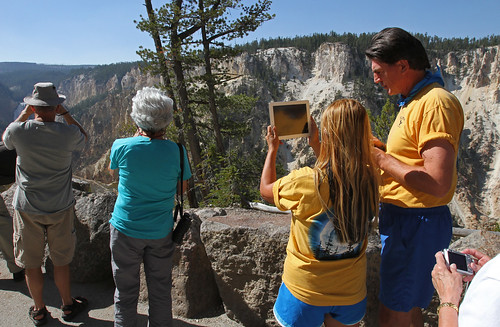
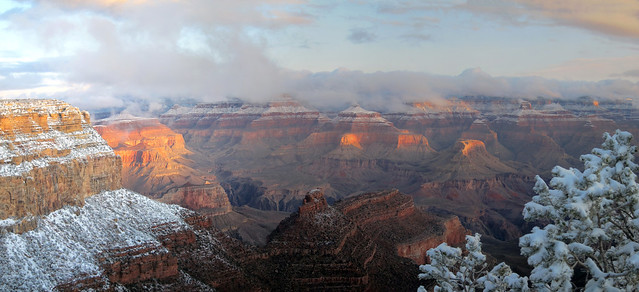
yellowstonenps on flickr.com
If you ever need a little reassurance that you're "like a lot of other folks," here's an opportunity to see how you stack up with the rest of the herd when it comes to attitudes toward your national parks.

A recent survey by everybody's favorite "senior" organization, AARP, revealed some stats that you can use for comparison purposes.

If you're a Baby Boomer, you're pretty likely to have visited some national parks – on average, 14 of them. In fact, boomers are the age group with the largest visitation rate – 75% of B. Boomers have headed into one of the nation's treasures. How does that stack up with other age brackets?

I confess, I'm old enough now that I don't know what these other groups bracket out as, so I had to look it up. You're a Gen-Xer if you were born in the early 60s to the early 80s. And of course, that leaves Millennials, born early 80s to the early 2000s. Visitation for the latter two groups breaks down to 65 and 65 percent, respectively. What's interesting about all of the generational breakdown is the purpose of park visits.

For us old foggies of the Baby Boomer generation, we're happy to "do" parks with scenic drives. All the better for me and my RV, thank you. As you get younger, the Xers are more interested in the parks from the standpoint of taking the whole family. And what surprised us, the Millennials are most likely to hit a national park that has a historical perspective to explore.

In terms of parks visited, the survey probably holds no surprises for us RVing folk. Grand Canyon, Yosemite, and Yellowstone top the list of "most visited."

To see the full story, click here.

Wednesday, February 17, 2016

National parks had more than 307 million visitors in 2015 -- top 10 parks visited, and more stats

National Park Service Certifies 2015 Visitation at 307 Million
            Reports Annual Top 10 Lists and Other Highlights

WASHINGTON – President Theodore Roosevelt was reelected in 1904, the same year rangers started counting national park visitors. There were more than 120,000 visits to America’s 11 national parks in the first year of counting. This week, the National Park Service (NPS) certified 2015 national park visitation at more than 307 million. It also released its popular Top 10 list of the most visited national park sites.

“The popularity of national parks is well known, but last year’s numbers really are extraordinary,” said National Park Service Director Jonathan B. Jarvis. “As the National Park Service celebrates its 100th year, we’re preparing to welcome more visitors than ever including a new generation of park supporters and advocates who are discovering their own national park adventures.”

Today’s figures were an increase from the unofficial visitation total of 305 million reported by the NPS in January. The difference is attributed to the recently-completed NPS visitation audit.

2015 visitation highlights include:
  • 307,247,252 recreation visits, a 4.9 percent increase over 2014 and the previous record of 292.8 million recreation visits.
  • 371 of the 410 parks in the National Park System report visitation.
  • 57 of the 371 reporting parks set a new record for annual recreation visits. Eleven parks had more than 5 million recreation visits in 2015. 
Notable park milestones in 2015:
  • Joshua Tree National Park surpassed 2 million annual recreation visits for the first time.
  • Rocky Mountain National Park surpassed 4 million annual recreation visits for the first time.
  • Yellowstone National Park surpassed 4 million annual recreation visits for the first time.
  • Grand Canyon National Park surpassed 5 million annual recreation visits for the first time.
  • Glacier National Park surpassed 100 million total recreation visits (1910 to 2015)
  • 2 parks are reporting visitation for the first time
    • Charles Young Buffalo Soldiers National Monument
    • Waco Mammoth National Monument 
Overnight stays in park campgrounds and backcountry were up over 2014.
Total overnight stays (sum of all categories) were up 6 percent over 2014.
Highlights:
  • Concessioner campground overnights were up 12.5 percent.
  • NPS campground tent overnights were up 13 percent.
  • NPS campground RV overnights were up 10 percent.
  • Backcountry overnights were up 7 percent.

Top 10 Visitation
All Parks of the National Park System:
  1. Blue Ridge Parkway - 15,054,603
  2. Golden Gate National Recreation Area - 14,888,537
  3. Great Smoky Mountains National Park - 10,712,674
  4. Lincoln Memorial - 7,941,771
  5. Lake Mead National Recreation Area - 7,298,465
  6. George Washington Memorial Parkway - 7,286,463
  7. Gateway National Recreation Area - 6,392,565
  8. Natchez Trace Parkway - 5,785,812
  9. Vietnam Veterans Memorial - 5,597,077
  10. Grand Canyon National Park - 5,520,736 
National Parks:
  1. Great Smoky Mountains National Park - 10,712,674
  2. Grand Canyon National Park - 5,520,736
  3. Rocky Mountain National Park - 4,155,916
  4. Yosemite National Park - 4,150,217
  5. Yellowstone National Park - 4,097,710
  6. Zion National Park - 3,648,846
  7. Olympic National Park - 3,263,761
  8. Grand Teton National Park - 3,149,921
  9. Acadia National Park - 2,811,184
  10. Glacier National Park - 2,366,056

Friday, January 8, 2016

Who owns the names of national park treasures?

The question, "What's in a name," has evidently turned to "What's a name worth," when the venue is Yosemite National Park.

The Ahwahnee -- NPS photo
Federal attorneys have filed a response to a lawsuit against the National Park Service, filed by DNC Parks & Resorts at Yosemite Inc. (DNC), a company that at one time held contracts for concession services at the California park. But when the company was outbid for contract renewal, things got ugly. It turns out that without warning the Park Service, DNC had filed for trademarks on famous names in the park. For example, DNC says it owns the name "The Ahwahnee," which is the name of a hotel in the park. DNC didn't build the hotel, but says it wants money for the name and the now-trademarked names of other park venues.

How much? They claim that the Park Service should shell out $44 million for park names – while federal attorneys say the intellectual property might be worth a little over a million and a half dollars. Spelling it out in black and white, the federal response says, "DNCY’s parent company has apparently embarked on a business model whereby it collects trademarks to the names of iconic property owned by the United States."

It looks like a protracted fight is set up. But in a time when public lands are in dispute, vis-à-vis, the takeover of a federal wildlife refuge in Oregon by a group that demands public lands be turned over to "the people," nothing is surprising.


Thursday, November 26, 2015

One hundred years of US National Parks -- get ready for the BIG movie

For many RVers, the year 1916 should go down as a date of celebration. That was the year the National Park Service got its start. For you park trivia fans, you'll already be able to name the first of the nation's parks [pause for head scratching]: That's right! Yellowstone. In fairness, Yellowstone was recognized as a park back in 1872 when the federal government took steps to protect it, but the Park Service had to wait a while for its own birthing.

From small beginnings, the National Park System has expanded, and today, America holds title to 58 "National Parks," but really, counting National Monuments and other holdings, the service manages affairs on about 409 different "units," comprising 84 million acres. Across those 84 million acres there are only 8,500 miles of roadway, meaning to really get out and see these great treasures, a lot of us would have to get out of our rigs and do the walkabout.

Obviously, it's not possible for a lot of us to do that. So what's the next best thing? Walk or roll into an IMAX theater next year, and celebrate 100 years of the parks watching the movie, National Parks Adventure. Not only will you get out on the trails of some of the most magnificent protected areas of the U.S., in many cases you'll get an eagle's eye view through some great aerial shots.

To whet your appetite, take a look at the trailer for the upcoming show.


The coolest RV products and accessories for RVers at Amazon.com. Click here.

Thursday, August 13, 2015

Experience historic Kennesaw Mountain National Battlefield Park

This month's National Park Getaway
By Amanda Corman, Park Ranger, Kennesaw Mountain National Battlefield Park, Georgia

Photo: NPS
Nestled between the historic cities of Kennesaw and Marietta, Georgia, Kennesaw Mountain National Battlefield Park preserves nearly 3,000 acres of a strategic battle site of the American Civil War. Appealing to history enthusiasts, nature lovers, and hikers alike, the largest continuous green space in metro Atlanta provides more than 20 miles of trails.

Museum. Photo: NPS/Jason Martz
If you start your visit by watching the award-winning film “Kennesaw: One Last Mountain” and exploring the museum in the visitor center you'll gain invaluable insights into the lives of the soldiers and civilians who were affected by the horrors of war. Once you leave the visitor center you might make the trek, by foot or by car, to the crest of Big Kennesaw. At the summit you're greeted by Confederate gun emplacements guarding the panoramic view of Atlanta and the surrounding Georgia Piedmont region.

Your next steps should lead to the 24-gun battery. The hike up Pigeon Hill, a popular next destination, leads to the Confederate earthworks that were instrumental in overcoming a major attack by Union General William Tecumseh Sherman.

The journey continues as you reach the location of Cheatham Hill and the Illinois Monument. You can walk the Confederate battle line to the monument or take the Union approach by hiking the Union Assault Trail. Each provides a different perspective on the deadly attacks of June 27, 1864. The now-quiet battlefield offers an oasis for nature and history lovers alike.

Kolb's Farm. Photo: NPS
For the final leg of your journey at Kennesaw Mountain, head to Kolb's Farm. The park's last remaining Civil War-era structure adds a personal touch to the battlefield. This 1830s home, with a family cemetery adjacent to the house, is the surviving witness to the battle.

Whether you walk or drive through this battlefield park, you leave behind the hustle and bustle of the surrounding metro Atlanta area and discover the natural beauty and rich history of Kennesaw Mountain National Battlefield Park.

Read more here

Thursday, August 6, 2015

Four new National Historic Landmarks designated


WASHINGTON, August 4, 2015 – Secretary of the Interior Sally Jewell and National Park Service Director Jonathan B. Jarvis today announced the designation of four new national historic landmarks.  The designation recognizes the sites as places that possess exceptional value and quality in illustrating or interpreting the heritage of the United States.

“Though very different from one another, these places reflect the creatively and ingenuity of the American spirit,” said National Park Service Director Jonathan B. Jarvis. “National historic landmarks are an example of how the mission of the National Park Service extends beyond park boundaries to recognize additional places of national significance in communities throughout the country."

The four national historic landmarks announced today are:
  • First Peoples Buffalo Jump, Cascade County, Mont.
Photo: stateparks.mt.gov
First Peoples Buffalo Jump is one of the oldest, largest, and best preserved bison cliff jump locations in North America.  Its monumental record of stone surface architecture, deeply stratified bison bone deposits, multiple tipi ring concentrations, and extensive evidence of ceremonies indicate that, for approximately 5,700 years, First Peoples Buffalo Jump held the paramount position in the Northern Plains “bison culture.”  This site holds the potential for defining the evolving sophistication of mass-procurement strategies of hunter-gatherer societies in the Northern Plains, and may also provide insights regarding cultural development of Precontact hunter-gatherer societies in the western United States.
  • George Washington Masonic National Memorial, Alexandria, Va.
Photo: gwmemorial.org
The George Washington Masonic National Memorial stands among the most architecturally significant projects to honor George Washington and one of the boldest private efforts to memorialize him. The Grand Lodges of the states and territories, which usually operate independently, joined forces to build this national memorial. This eclectic building combines neoclassical architecture common to American memorials and civic buildings with a modern skyscraper design.
  • Lafayette Park, Detroit, Mich.
Photo: nps.gov
Lafayette Park is one of the earliest planned and most fully-realized urban renewal projects of the mid-twentieth century.  It succeeded in creating an ethnically-diverse community that continues to thrive today and is generally regarded as one of the best and most successful examples of a residential urban renewal development in the nation.  It was a collaborative design endeavor between architect (Ludwig Mies van der Rohe), developer (Herbert Greenwald), planner (Ludwig Hilberseimer), and landscape architect (Alfred Caldwell).
  • Red Rocks Park and Mount Morrison Civilian Conservation Corps Camp, Jefferson County, Colo.
Photo: nps.gov
The outstanding architecture and landscape architecture of Red Rocks Park and Mount Morrison Civilian Conservation Corps Camp illustrate the principles and practices of New Deal-era naturalistic park design and master planning in a metropolitan park as well as the use of Civilian Conservation Corps (CCC) labor to develop such a park. Mount Morrison CCC Camp is one of the few surviving camps in the nation that retains a high concentration of original resources. The amphitheater in the park is one of America’s best known performing arts venues, famous for its natural acoustics, design, and setting.

Thursday, July 2, 2015

Visit beautiful Greenbelt Park, Maryland -- an urban oasis

GREENBELT PARK, Maryland
This month's National Park Getaway
By Kevin P. Barry, park ranger, Greenbelt Park

Photo: NPS
Welcome to an urban oasis. Although most visitors find it hard to believe, Greenbelt Park is just 12 miles from Washington, D.C. The peace and quiet that you'll find here evoke images of a dense forest or mountain resort. That's what you’ll experience when you visit Greenbelt Park -- untrampled nature in a region where most wild spaces have disappeared.

Despite its primitive setting, the campground is close to public transportation. Even the train to Washington, D.C., is within walking distance from campsite loops. Leave your car or camper on-site and take the train to such places as Kenilworth Aquatic Gardens, Mary McLeod Bethune Council House, the National Mall, the Smithsonian Institution's museums, and a host of other sites in and around the city. After you've enjoyed the sights of the city, enjoy a campfire and a quiet night's rest at your campsite.

Photo: NPS
Greenbelt Park attracts visitors from across the country and around the world, drawn by the recreational opportunities, stunning natural beauty, and a campground that is open year-round for RVs or tents at an affordable rate of $16 per night ($8.00 for Golden Age, Golden Access, and the America the Beautiful Senior pass card holders). The campground offers more than 170 campsites, nine miles of trails, and several day-use picnic areas. Make online reservations to guarantee your site up to three months in advance.

Wild yet accessible, Greenbelt Park is one of those places that you may not have heard of, but once you visit, you'll be back and telling friends about the national park treasure you discovered. The memories you create will be lifelong.

Read more here


Friday, May 1, 2015

Relive the Old American West at Grant-Kohrs Ranch National Historic Site

 GRANT-KOHRS RANCH NATIONAL HISTORIC SITE, Montana
This month's National Park Getaway
By Julie Croglio, Chief of Interpretation and Education, Grant-Kohrs Ranch National Historic Site

Wide open spaces, the hard-working cowboy, his spirited cow pony, and vast herds of cattle are among the strongest symbols of the American West. Once headquarters of a 10-million-acre cattle empire, Grant-Kohrs Ranch National Historic Site preserves these symbols and commemorates the role of cattlemen in American history.

Kohrs family ranch house - NPS
Today the main house and its original furnishings are preserved intact, along with the bunkhouse, blacksmith shop, horse barns, cattle sheds, and other outbuildings dating back to the 1860s. Cattle graze on the lush grasses of this working ranch, much as they have since the 1860s.
Kohrs dining room - NPS

Johnny Grant had the main house built in 1862 and used it as a trading post and headquarters for his ranching operations. In 1866, Grant sold the house to Conrad Kohrs, who was to become known as Montana's "cattle king." Guided house tours are offered year round. Filled with original furnishings, the house is a great example of one family's success in a business that was filled with uncertainties.

Warren blacksmith shop - NPS
If touring historic homes is not your thing, not to worry. Self-guided exhibits allow you to explore a number of historic buildings and trails at your own pace. The cowboy bunkhouse, blacksmith shop, and thoroughbred barn are just a few of the buildings where you can gain a greater appreciation for the open-range era and cowboy way of life. Seven miles of walking trails take visitors across the river through park pastures and fields.

Ranger-led activities such as chuck wagon programs, cowboy talks, blacksmith demonstrations, and wagon tours are offered seasonally. For kids, there are Junior Ranger booklets, roping lessons, cowboy clothing to try on, and visits with the horses, cows and chickens.

Mid-summer marks the start of haying season. Visitors have a unique opportunity to watch historic field demonstrations using draft horses and horse-drawn haying implements. Check the calendar for events that offer exceptional opportunities to experience the sights, sounds, and smells of an operating ranch.

There's always plenty to see and do at Grant-Kohrs Ranch. Open daily except for Thanksgiving Day, December 25, and January 1, the park charges no entrance fee. For directions and more information, visit the park website.

Tuesday, April 21, 2015

Bryce Canyon parking restrictions will impact RVers this season

Hoodoos  R&T De Maris
Along the "grand staircase" of National Parks in the midsection of the U.S. is Bryce Canyon National Park. It's a bit of misnomer, because Bryce Canyon really isn't a canyon, but rather a collection of colossal rock-formed amphitheatres. Perhaps best known for its odd erosion created hoodoos, it's a picturesque – and wildly popular – destination.

That popularity led to the introduction of a voluntary shuttle bus system, in an attempt to alleviate vehicle traffic in 2000. But RVers, perk up your ears, while the shuttle service may be voluntary for most, there are some restrictions now in place that could have an impact on your visit – at least through September 30.

Parking restrictions will basically force most all RVs to park only in a few designated lots and in campsites, whereafter you'll be in your toad car, tow vehicle, bike, foot, or shuttle bus to get around. Here's the finer points of the rule: Restrictions apply to all vehicles in excess of 25 feet, including motor homes and vehicles with trailers. You'll not be able to park anywhere in the park with the exception of:

  • Shuttle Station in Bryce Canyon City (3 miles north of park). 
  • Bryce Canyon overflow parking lot (across from visitor center at entrance to North Campground)
  • Campsites in North, Sunset, and Ruby's campground (for those who are camping)
  • Sunrise Point Loop Road (use ONLY parallel parking spaces along one-way road)
  • All viewpoints and parking lots south of mile marker 3. 


Put another way, RVs will not be allowed at the visitor center, Sunrise General Store, Sunset Point, Bryce Point, Inspiration Point, Paria View or Fairyland Point, among other places. However, you can grab a shuttle bus to the park's most popular viewpoints and destinations. The busses run on a 15-minute schedule, but the routing times will vary through the season. Here's the skinny: Now through May 17, 8 a.m.-6 p.m.; May 18 through September 8, 8 a.m.-7 p.m.; and September 9 through the 30th, 8 a.m.-6 p.m.

Camping in nearby National Forest
What about camping? Glad you asked. Bryce Canyon National Park has two campgrounds, North and Sunset, located in close proximity to the visitor center, Bryce Canyon Lodge and the geologic wonder that is the Bryce Amphitheater. Both have restrooms with flush toilets, and drinking water. During the summer months coin-operated laundry and shower facilities are available at the general store nearby. There are no hook-ups in the campgrounds, but a fee-for-use dump station is available for RV users at the south end of North Campground.

Both of these campgrounds are located in a Ponderosa Pine forest habitat with equal amounts of shade and sun, giving them a similar appearance. All sites are limited to 10 people (with no more than 6 adults (adult=16 and up)), 3 tents and 2 vehicles and cost $15 per site/per night. Holders of special Park Passes; Senior Pass, Access Pass (part of the America The Beautiful - National Park Service & Federal Lands Pass System) or the Golden Age & Golden Access Passes, receive a 50% discount. Sites fill by early afternoon during the summer months.

We've camped both inside the park, and outside in "dispersed" camping in nearby National Forest Service land. While "free" in the National Forest is certainly an advantage, the convenience of camping in the park itself has its advantages.

Check out Russ and Tiña's weekly shows on Your RV Podcast.

All photos, R&T De Maris

Wednesday, April 1, 2015

Appomattox Court House National Historical Park, Virginia

This month's National Park Getaway

By Jim Godburn, park ranger, Appomattox Court House National Historical Park

NOTE: Five days of 150th anniversary (click for schedule) commemorative events are planned from April 8 to April 12, 2015, at Appomattox Court House to mark the end of America's Civil War. 

Photo: NPS Image of "The Surrender"
by contemporary artist Keith Rocco


Appomattox – the name echoes through history, beckoning people worldwide to this historic village nestled in the quiet Virginia countryside.

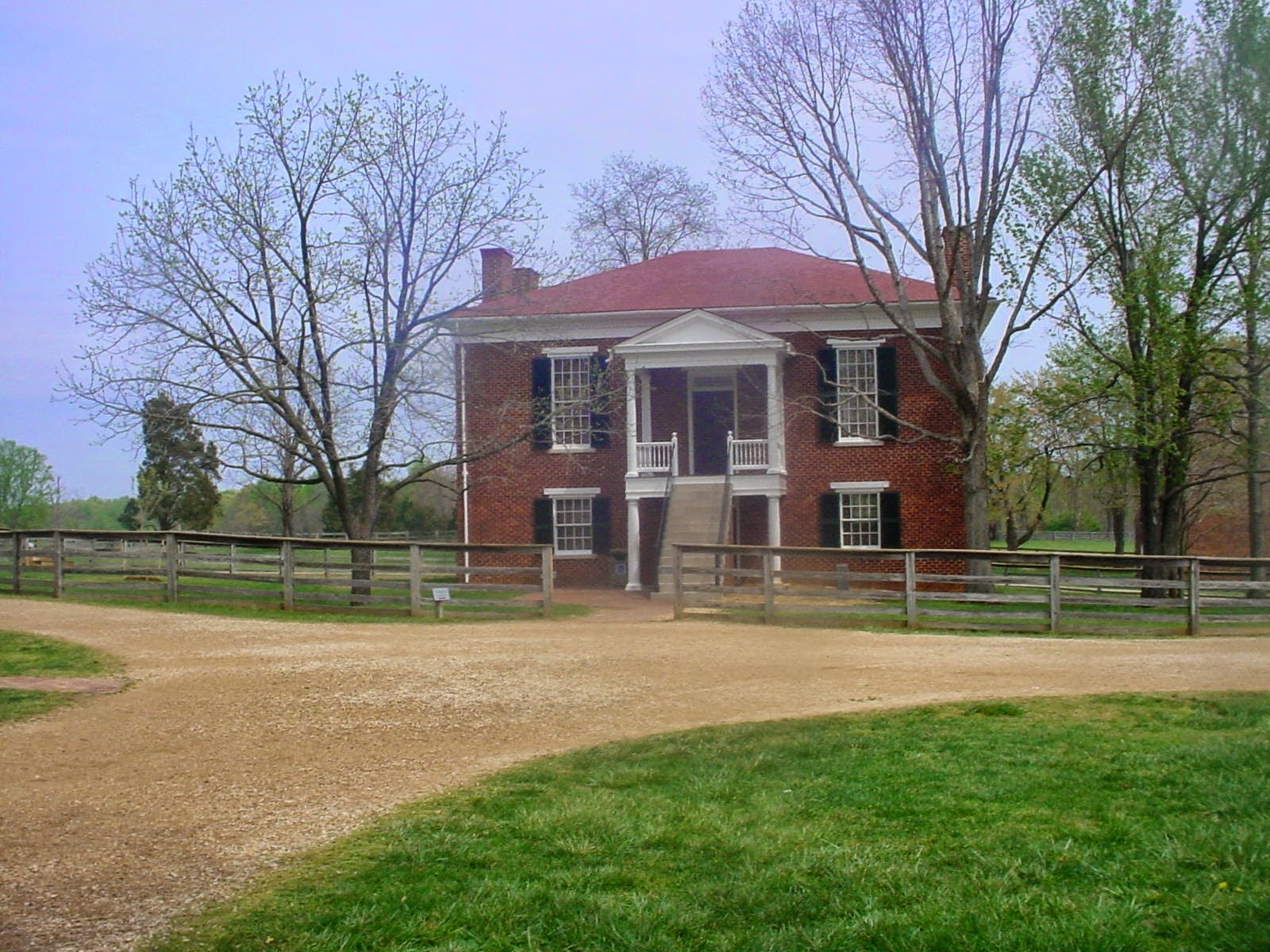
Stroll into the village and stop at the court house, a re-creation of the building that was the 19th-century seat of government in Appomattox County and today serves as the park's visitor center. There, you can talk with a ranger and find park brochures. Head to the second floor to tour the museum and view a short film in the theater.

NPS Photo of Appomattox County Court House
Just a two-hour drive west from Richmond, Virginia, Appomattox Court House is the site where Robert E. Lee surrendered Confederate forces to the Federal command of Ulysses S. Grant. The surrender, on April 9, 1865, ushered in the final days of the American Civil War as well as the first, halting footsteps of the journey toward citizenship for former slaves.

At the court house, join one of the scheduled talks, presented daily from May through October. You'll hear about military events and village life from a 21st century perspective from a uniformed ranger. Gain a 19th century perspective from staff or volunteers outfitted in attire of the 1860s: you might meet a soldier, a former slave, a doctor, or a citizen of the village. For these characters, the year is always 1865.

You can tour the village at your own pace. Visit a lawyer's office, county jail, general store, and tavern to get a feeling for 19th century village life. At Clover Hill Tavern, the neighborhood's oldest building, you'll learn how 30,000 paroles were printed and distributed to surrendering Confederate soldiers. A small bookstore is located in the kitchen building behind the tavern.


Appomattox Court House is open 360 days a year, from 8:30 a.m. to 5:00 p.m.

Read more here.
 

Monday, December 22, 2014

Seven new US National Parks and Monuments

In a rare act, Congress has passed a bill that includes perks for the National Park System. Friday, December 19, President Obama signed into law the Defense Authorization Act, which includes the creation of seven new National Parks and Monuments  in eight states.

NPS photo
Blackstone River Valley National Historical Park will be comprised of specific historic sites and resources within the John H. Chaffee Blackstone River Valley National Heritage Corridor which stretches from Pawtucket, Rhode Island to Worcester, Massachusetts. The park will protect and interpret resources associated with the development of textile mills and other industries in the valley.

Tule Springs Fossil Beds National Monument in the greater Las Vegas, Nevada area will protect and interpret significant Pleistocene paleontological, scientific, educational and recreational resources. The monument will be created with the transfer of 22,650 acres of land from the Bureau of Land Management to the National Park Service.

NPS photo
Valles Caldera National Preserve, an historic ranch with vast natural and cultural resources that lies within a volcanic caldera in the Jemez Mountains of New Mexico, is being transferred from the Valles Caldera Trust to the National Park Service. Grazing, hunting and fishing, trapping and other traditional uses will continue at the ranch. The legislation also provides protections for Native American archeological and sacred sites, dissolves the Valles Caldera Trust, provides special hiring authorities for current Trust employees, and governs the transition of assets and liabilities to the National Park Service.

AgnosticPreachersKid on wikipedia.com
Pershing Park near the White House is re-designated as the World War I Memorial in honor of veterans throughout the nation who served in that war. The District of Columbia World War I Memorial on the National Mall will continue to be dedicated to District residents who served in World War I.

Coltsville National Historical Park in Hartford, Connecticut is authorized to be established after the Secretary of the Interior acquires sufficient lands for a manageable park, including space in the renovated East Armory building.  The park will protect and interpret resources associated with the historic Colt arms manufacturing facilities and community.

wikipedia.org
Harriet Tubman National Historical Park is authorized to be established after the Secretary of the Interior acquires sufficient lands for a manageable park.  The park will protect and interpret resources associated with the life and work of Harriet Tubman in Auburn, New York where she lived in her later years after her Underground Railroad work. The park will be a companion to the Harriet Tubman Underground Railroad National Historical Park on the Eastern Shore of Maryland.

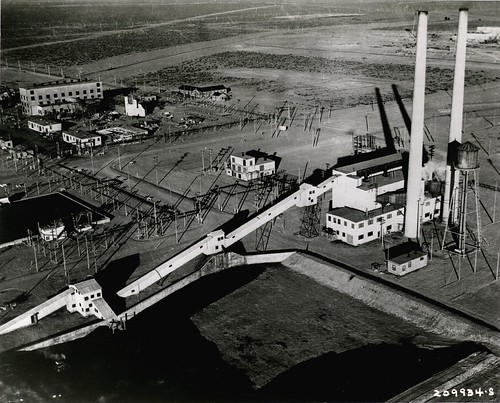
Hanford -- U.S. Government Work
Manhattan Project National Historical Park is authorized to be established after the National Park Service and the Department of Energy enter into an agreement.  The park will protect and interpret resources associated with the development of the atomic bomb during World War II. The park will have three locations: Hanford, Washington, Los Alamos, New Mexico, and Oak Ridge, Tennessee. It will be administered in partnership with the Department of Energy which will continue to own most facilities.

Wednesday, November 5, 2014

Free entrance day in National Parks on Veterans Day, November 11

Photo of hikers on the Cerro Grande Trail 
at Bandelier National Monument. NPS photo
November 11, Veterans Day, is the last free entrance day in the National Parks for 2014. The fee waiver includes: entrance fees, commercial tour fees and transportation entrance fees. Other fees such as reservation, camping, tours, concession and fees collected by third parties are not included unless stated otherwise. Read more here.

Tuesday, October 21, 2014

A third of nation's parks may soon jack up fees

Grand Canyon NPS on flickr.com
Cash-strapped, and preparing for its 2016 centennial, the National Park Service is looking for a bit more revenue. And according to an August 14 memorandum from Jon Jarvis, the NPS' chief, the agency isn't expecting the government to cough up the new money – it'll come from increasing fees at about a third of the 400-some properties it manages. How will the increases affect you?

While the greatest number of visitors will be affected by hikes in some park gate fees, for some in the RVing community, this won't amount to a change. Folks holding Golden Age passes, or disabled travelers with Golden Access permits don't pay any fees to enter National Parks. And with gate fees, how much the price increases will amount to depends on the park itself.

Heading into some of the bigger attraction parks, the fee increases look to be on the lower side. For example, Rocky Mountain National Park in Colorado will see a jump in gate fees from the current $20 to $30. But 300 miles down the road at the lesser-visited Great Sand Dunes National Park, admission fees will multiply two and a half times. But the pain may be less – Grand Sand Dunes currently charges a $3 per head admission rate, the proposed rate of $10 – less than the cost of a matinee – may not seem so bad.

But gate fees aren't the only fees headed for the trampoline. California's Yosemite National Park family campground fees haven't changed since 2006. Those $5 to $20 per night fees will jump from $6 to $24. Assuming the $5 sites become $6, and the $20 jumps to $24, that's still only a 20 percent increase. But camp site fees in other parks would take a much bigger leap: Lake Roosevelt in Washington State will see an 80 percent overnight fee jump, from $10 to $18.

In his memorandum to regional supervisors, Jarvis tried to encourage the troops to drum up support for the fee increase proposals, suggesting that the agency would take flack from some over the increases. In some areas, there seems to be a cautious – but not necessarily negative – reaction on the part of park guests. On a social media network page put up by the Lake Roosevelt National Recreation Area, one commenter said, "Seems reasonable – all other expenses have increased greatly since 1995. Not everyone was supportive. On the same site a writer commented, "Don't limit access with regressive fees. There is plenty of fat to cut in the federal budget. Start by cutting bloated congressional and senate pensions."

Reaction to the fee increase proposals may tend to swing on an understanding of where the collected dollars go. Unlike many government agencies, fees collected by the Park Service are part of the Federal Lands Recreation Enhancement Act, which mandates the fees aren't returned to Washington, but rather are kept at the park itself, to be used for local improvements. With maintenance backlogs in almost all parks, its clear fees won't be contributing to lawmaker pensions – bloated or otherwise.

There is a fly in the ointment: Public comments on the fee increase proposals are being sought. But instead of having a central point for comments to be made on a system-wide basis, they're being handled by each individual park. Tracking down which of the parks is considering a fee hike can be frustrating. If you're concerned your favorite park or parks may be one of them, first, visit the park website. Still not sure? A call to the park's headquarters should give you the information you need.

Monday, October 20, 2014

Are you a hardy RVer? Catch Grand Canyon's North Rim now -- it's spectacular!

National Park Service on flickr.com

We have memories from our first visit to the North Rim of the Grand Canyon: Outstanding views. Intense quiet. Frozen plumbing. The fact that we landed at the park in October may have added somewhat to all of these features. The North Rim gets far less in the way of visitors than the South Rim at any time, but when the cold starts setting it, well, as RVers, we practically had the place to ourselves.

If you come prepared, right now might just be the ideal time to visit the North Rim. Before the snow falls to the point that Highway 67 leading into the park from Jacob Lake is closed, the park, although on a skeleton-crew basis, is still open for company. As we write this, it's a balmy 68 degrees, and the 10 day forecast shows only two days where the nighttime temps will hit the freeze point – and only that – 32 degrees.

So how can you prepare for your adventure? Bring warm clothes, bring your camera, and make sure your RV furnace is operational. Yes, we love our RV's independent "blue flame heater," but while that keeps the inside of the coach toasty warm, it doesn't do a thing to keep the drain lines and holding tanks from icing up. Many newer model RVs have furnaces that duct a little heat down into the netherworld of pipes and tanks, ensuring your plumbing won't freeze.

Back in 1996, our research RV was an ancient truck camper, and while the furnace did keep the chill off the interior, one half of our research team recalls with fondness gaping at the water in the bottom of the shower stall as it crept up and up – the p-trap below the shower pan simply froze solid. It wasn't until we got to warmer country that showers would be possible for us. We also recall "freeze drying" laundry on a line strung out behind the rig. Getting smacked with a solid t-shirt is a real wake-up call.

But despite the inconveniences we encountered, the park was ours. We could motor from viewpoint to viewpoint and never have any issue of finding a place to park. And it was so quiet! And the lighting – there's much to be said for fall lighting to really enhance your landscape (canyonscape?) photography. Bring a tripod and a pair of gloves, too. If it gets really cold, keep your camera inside your coat and bring it out to shoot – it'll keep the batteries warm.

Don't expect a lot of amenities in the off-season. Already the mule rides, the Lodge, and Visitor Center have shuttered for the winter. On the other hand, come after October 31 and you won't have to pay entrance fees Until the end of October you can still camp in the North Rim Campground, and "walk in reservations" are the rule of the day. Come November 1, the park changes into a "day use" park for RVers. Jacob Lake Campground, 40 miles to the north, is already closed. But if you've got a hankering, you'll find plenty of camping available at the Lee's Ferry Campground, near Marble Canyon. It's a bit of a drive, but a day trip to the North Rim will make for phenomenal memories


Thursday, October 9, 2014

National Fossil Day coming soon!

Dig into the world of saber-toothed tigers, woolly mammoths, and dinosaurs on National Fossil Day on October 15, 2014. The nationwide celebration will feature special events that promote public awareness and stewardship of fossils.

“More than 250 national parks protect a variety of fossils, ranging from a flying reptile known as pterosaurs in Big Bend National Park to a rare sauropod skull from Dinosaur National Monument to primitive algae in Glacier National Park,” said National Park Service Director Jonathan B. Jarvis. “These irreplaceable treasures offer clues to the history of life, past climates, and ancient landscapes and provide us with a glimpse into a world we can only imagine.”

Fossils discovered on the nation's public lands preserve ancient life from all major eras of Earth's history and include samples from every major group of animal or plant. Visitors have the opportunity to see these fossilized remains in the same places that those animals and plants lived in millions of years ago.

National Fossil Day was started in 2010 by the National Park Service and the American Geological Institute. This year, more than 300 partners, including museums, federal and state agencies, fossil sites, science and education organizations, avocational groups, and national parks such as Chaco Culture National Historical Park, Petrified Forest National Park, and Agate Fossil Beds National Monument, will sponsor special events.

Paleontologists and geologists from the National Park Service will also be part of a marquee Fossil Day celebration at the Smithsonian National Museum of Natural History in Washington, D.C. Along with colleagues from partners that include the Smithsonian National Museum of Natural History, American Geosciences Institute, the Bureau of Land Management, the U.S. Forest Service, the National Science Foundation, and Maryland Dinosaur Park, they will help children explore prehistoric life and dig for fossils.  A team from Dinosaur Valley State Park in Texas will have a special exhibit on their world renowned dinosaur tracks.  Children are invited to become “Junior Paleontologists” at 10:00 a.m. on the entrance steps to the Smithsonian Natural History Museum.

For more information on National Fossil Day, please visit http://www.nature.nps.gov/geology/nationalfossilday/.


Keep stuff in place
with "Earthquake Putty"

Do you have items in your RV you like to keep in place, like on a table, bedstand or counter? This is the stuff you need. Quakehold Museum Putty is designed to keep items secure in earthquakes! Hey, a moving RV is a constant earthquake! To use this, just pull off the amount needed, roll it in your fingers until soft, apply to the base of the object, then lightly press the object to the surface. Later, it comes off clean. It works on most surfaces. RVers love this stuff! And it's cheap! Learn more or order.

Wednesday, October 8, 2014

Take an amazing aerial tour of Black Canyon National Park

Enjoy a spectacular aerial tour of Black Canyon of the Gunnison National Park, located near Montrose, Colo. David Bott, from OutsideOurBubble.com, shot this at a remote area of the park after obtaining permission from the only other guests in the area at the time. According to David’s explanation, it was a difficult location to videotape, so we’re fortunate to be able to view this breathtaking region from the air.


Wednesday, October 1, 2014

Alibates Flint Quarries National Monument, Texas


This month's National Park Getaway
Less than an hour drive from Amarillo, Texas

Fritch, Tex. – For more than 13,000 years, people have used colorful flint from a mesa in the heart of the Texas Panhandle. Archeological traces of prehistoric Indians' homes, workshops and campsites dot the entire Canadian River region of the Texas Panhandle, but few sites are as dramatic as Alibates Flint Quarries.

This 1,337-acre monument, the only national monument in the state of Texas, protects a mesa top literally covered in a carpet of Alibates flint chips. Collecting is not allowed, but you can pick up and examine the flint, even taste it, as long as you put it back.
The best time to visit is during the shoulder seasons for optimum conditions, including the second week of September through the end of October. If you're in the area on October 4, plan to attend FlintFest, an annual celebration that takes place on the first Saturday in October. This year there will be several highlights including the knap-in, featuring some of the best flintknappers from around the area demonstrating the skill of making stone tools and weapons.

Nearby Lake Meredith National Recreation Area offers a variety of camping opportunities, including scenic overlooks, shoreline camping, and wooded campgrounds. All campgrounds are FREE. No reservations are needed; sites are on a first-come, first-served basis. Trailer/RV hookups and showers are NOT available anywhere at Lake Meredith. There are also several private RV parks in the area.

Alibates Flint Quarries is open seven days a week from 9 a.m. to 4 p.m., closed only on New Year's, Thanksgiving and Christmas days. Read more about Alibates Flint Quarries National Monument here.

Thursday, September 25, 2014

Free entrance to all National Parks on Saturday, September 27


Celebrate National Public Lands Day in a National Park
WASHINGTON – This Saturday, September 27, celebrate National Public Lands Day by heading to a national park to play, learn, serve or work. The 21st annual event will feature free admission to every National Park Service site, as well as special activities and volunteer work projects across the country.

Sponsored by the National Environmental Education and Training Foundation, National Public Lands Day is the largest single-day, hands-on volunteer effort to improve and enhance federal, state and local public lands in the country. Last year, about 175,000 volunteers worked at 2,237 sites in every state, the District of Columbia, Guam, and Puerto Rico. Click here for more information and a list of project sites for this Saturday.

In addition to providing free entrance on Saturday, many parks will host special ranger programs and events, including a star party at Craters of the Moon National Memorial and Preserve, a Fall Fiesta at Bandelier National Monument, the Peanut Festival at Jimmy Carter National Historic Site, a wilderness fair at Joshua Tree National Park, the Mountain Festival at City of Rocks, and Music and Art in the Mountains at Blue Ridge Parkway.

Click here for more information about the free entrance days in the National Parks.

Tuesday, August 5, 2014

Capulin Volcano National Monument: This month's National Park Getaway

By Matt Tillson, Park Ranger, Capulin Volcano National Monument, New Mexico
Capulin Volcano
(Photo: en.wikipedia.org)

Rising above a dramatic landscape in northeastern New Mexico is Capulin Volcano—a unique place of mountains, plains, and sky. Born of fire and forces continually reshaping the earth’s surface, Capulin Volcano National Monument provides access to nature’s most awe-inspiring work.

An easy three-hour drive from Santa Fe, New Mexico; Amarillo, Texas; or Colorado Springs, Colorado; visitors will discover one of the nation’s best examples of a volcanic cinder cone and excellent views of the surrounding area. The monument hosts a variety of engaging activities and projects throughout the summer months.

Travel the two-mile paved Volcano Rim Road to enjoy picturesque views from the highest peak overlooking the Raton-Clayton Volcanic Field, check out the view of the Rocky Mountains from the rim or descend into the crater vent, take flight with the hummingbird monitoring project, stop in at the visitor center to enjoy the exhibits and park video and explore the park store.

Capulin Volcano is open daily except on Thanksgiving, Christmas and New Year’s Day. From Memorial Day to Labor Day, park hours are from 8:30 a.m. to 5 p.m., and visitors can drive to the top until 10 minutes before closing time. After Labor Day, the park operates from 8:00 a.m. to 4:30 p.m. Guests arriving after hours are welcome to walk or bike the Volcano Rim Road or hike the scenic Lava Flow and Boca trails with the chance of catching a glimpse of some of area wildlife like mule deer, pronghorn, or gray fox.

Read more here


Free webcast: Photographing America's National Parks

From National Parks Traveler

Mt. Rainier (Photo: NPS)
National park photography classes will take a big step forward in late August when Ian Shive, an award-winning photographer and author of The National Parks: Our American Landscape, conducts a live class over the Internet from Olympic and Mount Rainier national parks.

Hoh Rainforest,
Olympic National Park;
(Photo: NPS)
The show, Photographing America's National Parks, August 27-29, is being produced by CreativeLive, the world’s largest live online education network. CreativeLive will broadcast a live on-location shoot from Olympic National Park, a historic achievement that will provide access to places beloved by millions — all through the lens of one of the world’s most published photographers.

Shive, who will be live in Olympic National Park, with pretaped portions from Mount Rainier spliced into the show, will demonstrate his award-winning techniques during three days of shooting some of the most iconic locations in Mount Rainier and Olympic national parks. He will teach the key elements of professional outdoor photography, including: composition, shooting in challenging weather conditions, exposure settings for every environment, using filters to manage available light, scouting the perfect location and much more.

The classes will air August 27, 28, and 29 from 9 a.m.-4 p.m. PDT

All of CreativeLive’s live online classes are free to watch and accessible to anyone with an internet connection. Additionally, during the live event, anyone can ask Shive a question directly via CreativeLive’s social classroom. His course, complete with 22 hours of video, is also available to purchase for on-demand access for $99.

For full details and to RSVP for the live event, please visit this site.