Showing posts with label historic park. Show all posts

Wednesday, April 1, 2015

Appomattox Court House National Historical Park, Virginia

This month's National Park Getaway

By Jim Godburn, park ranger, Appomattox Court House National Historical Park

NOTE: Five days of 150th anniversary (click for schedule) commemorative events are planned from April 8 to April 12, 2015, at Appomattox Court House to mark the end of America's Civil War. 

Photo: NPS Image of "The Surrender"
by contemporary artist Keith Rocco


Appomattox – the name echoes through history, beckoning people worldwide to this historic village nestled in the quiet Virginia countryside.

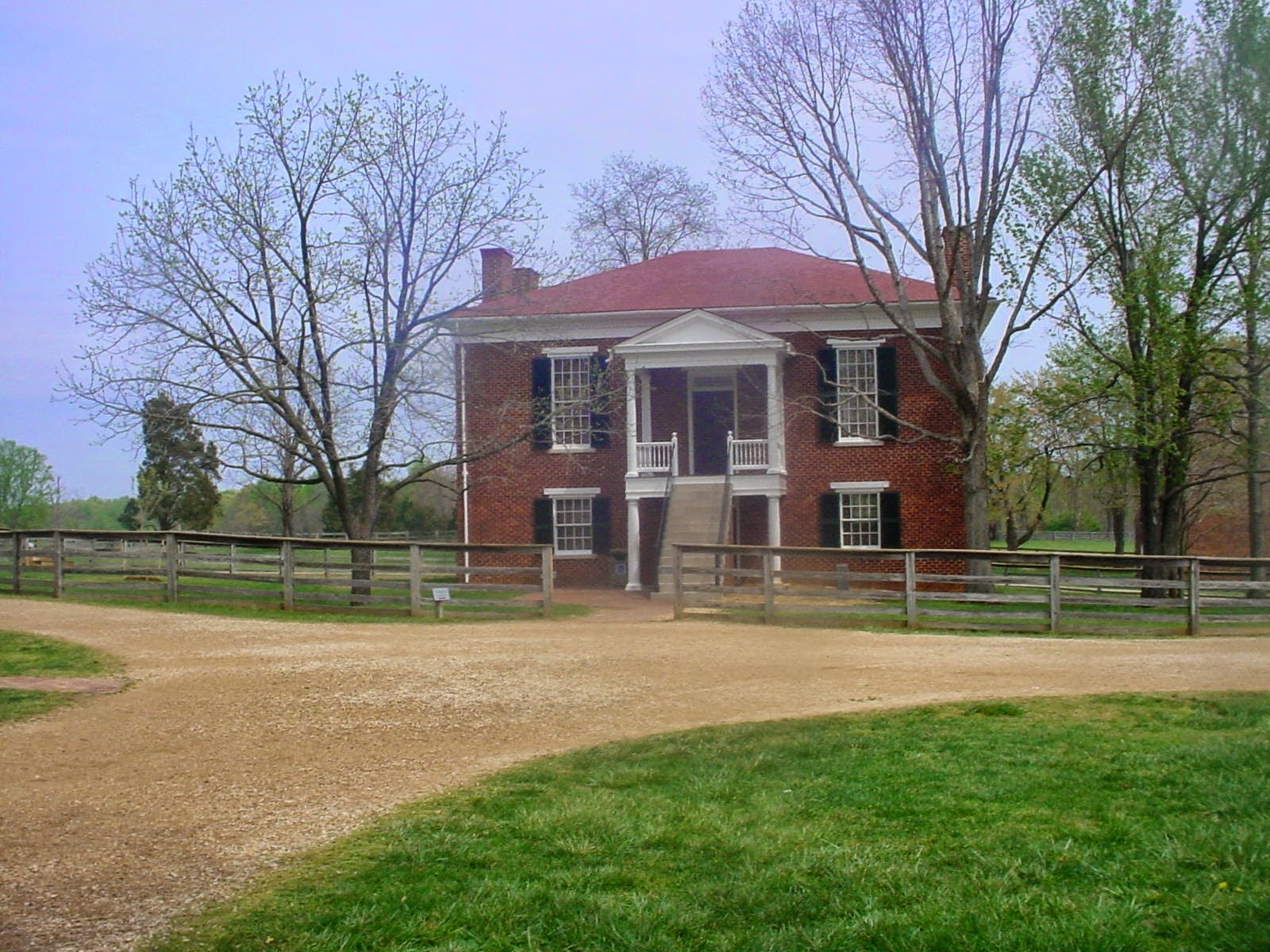
Stroll into the village and stop at the court house, a re-creation of the building that was the 19th-century seat of government in Appomattox County and today serves as the park's visitor center. There, you can talk with a ranger and find park brochures. Head to the second floor to tour the museum and view a short film in the theater.

NPS Photo of Appomattox County Court House
Just a two-hour drive west from Richmond, Virginia, Appomattox Court House is the site where Robert E. Lee surrendered Confederate forces to the Federal command of Ulysses S. Grant. The surrender, on April 9, 1865, ushered in the final days of the American Civil War as well as the first, halting footsteps of the journey toward citizenship for former slaves.

At the court house, join one of the scheduled talks, presented daily from May through October. You'll hear about military events and village life from a 21st century perspective from a uniformed ranger. Gain a 19th century perspective from staff or volunteers outfitted in attire of the 1860s: you might meet a soldier, a former slave, a doctor, or a citizen of the village. For these characters, the year is always 1865.

You can tour the village at your own pace. Visit a lawyer's office, county jail, general store, and tavern to get a feeling for 19th century village life. At Clover Hill Tavern, the neighborhood's oldest building, you'll learn how 30,000 paroles were printed and distributed to surrendering Confederate soldiers. A small bookstore is located in the kitchen building behind the tavern.


Appomattox Court House is open 360 days a year, from 8:30 a.m. to 5:00 p.m.

Read more here.
 

Wednesday, October 1, 2014

Alibates Flint Quarries National Monument, Texas


This month's National Park Getaway
Less than an hour drive from Amarillo, Texas

Fritch, Tex. – For more than 13,000 years, people have used colorful flint from a mesa in the heart of the Texas Panhandle. Archeological traces of prehistoric Indians' homes, workshops and campsites dot the entire Canadian River region of the Texas Panhandle, but few sites are as dramatic as Alibates Flint Quarries.

This 1,337-acre monument, the only national monument in the state of Texas, protects a mesa top literally covered in a carpet of Alibates flint chips. Collecting is not allowed, but you can pick up and examine the flint, even taste it, as long as you put it back.
The best time to visit is during the shoulder seasons for optimum conditions, including the second week of September through the end of October. If you're in the area on October 4, plan to attend FlintFest, an annual celebration that takes place on the first Saturday in October. This year there will be several highlights including the knap-in, featuring some of the best flintknappers from around the area demonstrating the skill of making stone tools and weapons.

Nearby Lake Meredith National Recreation Area offers a variety of camping opportunities, including scenic overlooks, shoreline camping, and wooded campgrounds. All campgrounds are FREE. No reservations are needed; sites are on a first-come, first-served basis. Trailer/RV hookups and showers are NOT available anywhere at Lake Meredith. There are also several private RV parks in the area.

Alibates Flint Quarries is open seven days a week from 9 a.m. to 4 p.m., closed only on New Year's, Thanksgiving and Christmas days. Read more about Alibates Flint Quarries National Monument here.

Tuesday, March 4, 2014

Visit Horseshoe Bend National Military Park during the bicentennial commemoration of the Creek War

Horseshoe Bend National Military Park, Alabama
a National Park Service Monthly Getaway
By Doyle Sapp, Superintendent, Horseshoe Bend National Military Park

Nature provided a landscape-sized protection in the shape of a sharp horseshoe bend of the Tallapoosa River to the people of several Upper Creek towns of present-day Alabama. These Creek people, also known as Red Sticks, chose this site, surrounded by water on three sides, to establish the village of Tohopeka in the waning days of 1813 as a safe haven during the Creek War of 1813-1814 and the War of 1812.
On March 27, 1814, the natural defense that the Tallapoosa provided was pitted against the technology of muskets and cannons. An army led by Major General Andrew Jackson of approximately 4,000 Americans, allied Creek and Cherokee arrived at the bend to attack the Red Stick encampment. The fighting raged for hours, but ended ultimately in a decisive American victory which made a national hero of Andrew Jackson.

(Photo: NPS.gov)
This struggle marked the end of the Creek War. Within six months, the Treaty of Fort Jackson was signed and the Creek Nation ceded 23 million acres to the United States government. These lands were divided into the new state of Alabama and the existing state of Georgia. 

Today, Horseshoe Bend National Military Park is a quiet 2,400-acre sanctuary, belying the chaos of the Creek War and the War of 1812. Starting in March 2014, the park commemorates the bicentennial of the battle.

The beautiful natural landscape of central Alabama offers many scenic vistas to explore on your visit. A 3-mile driving tour visits important battle sites, with stops at the spot where the Creek erected the protective log barricade in the early days of 1814 and the site of the Tohopeka village. Not to be missed is the 2.8-mile nature trail snaking through the dense hardwood and pine forest. Along the trail you’ll find a dramatic view overlooking the battlefield and the high ground overlooking the site of Tohopeka, the refuge village of the Red Sticks. 

The park will host a wide variety of interpretive events throughout March 2014, including a symposium in partnership with Auburn University, living history encampments, and Creek and Cherokee cultural demonstrations. Throughout the year, park volunteers demonstrate life at war and at peace through living history musters. Read more

Thursday, December 12, 2013

Explore the ruins of this 18th century settlement at Fort Frederica National Monument

By Denise Spear, cultural resource specialist, Fort Frederica National Monument

On the serene, isolated west shore of Georgia’s St. Simons Island, the ruins of an 18th century settlement stand as quiet testimony to a once-flourishing community. A powder magazine overlooks Frederica River, a remnant of British occupation in the New World.


Fort Frederica was established in 1736 by James Oglethorpe to protect the southern boundary of his new Georgia colony from the Spanish in Florida. The excavated foundations of structures remind visitors that the planned community of Frederica served the military garrison quartered there and housed a population of 1,000 from 1736 to 1758.

Oglethorpe's vision in establishing Frederica was rewarded in 1742 during the War of Jenkins' Ear, when Spanish forces from Florida and Cuba landed on St. Simons Island. Oglethorpe's attack on a Spanish reconnaissance party at Gully Hole Creek led to the battle at Bloody Marsh. Despite the name, casualties were light, and the Spanish continued their campaign on St. Simons. Clever deception on Oglethorpe's part convinced the Spanish to retreat from Georgia seven days later.

After the war, the British regiment disbanded, leading to the eventual decline of the civilian population and the town itself. Two centuries of fire, neglect, and the reuse of building materials left the fort and town of Frederica nearly barren. Few structures remained to tell the story.

Archeological investigations, begun in 1947, have uncovered the broad outlines of Frederica and many small treasures left behind by residents of this short-lived community. Using 18th century maps and journals as a guide, archeologists have unearthed many sections of the fort and town site. The resulting excavations provide great insights into Frederica's past.

Today you can stroll through the ruins of the former town site, marvel at the huge trees covered in Spanish moss, and wander the grounds for a glimpse into Frederica's past and colonial history.

Stop by the visitor center, open daily from 9 am to 5 pm, to pick up the park brochure and explore museum exhibits and artifacts. The 23-minute film, “History Uncovered,” shares a good overview of the park. Be sure to ask about the free audio tour before you set out on any self-guided exploration.

The Bloody Marsh Unit of the park commemorates the site where the 42nd Regiment of Foot and Highlanders from Darien defeated a regiment of Havana Grenadiers. This battle was deemed essential in ending the Spanish claim to Georgia. This area, on St. Simon's Island along Demere Road, is open from 8:30 am to 4 pm.

Centrally located on St. Simons Island, Fort Frederica is about an hour and a half drive from either Savannah, Georgia, or Jacksonville, Florida. The archeological remnants of Frederica are protected by the National Park Service. The park is open year-round except for Thanksgiving, Christmas, and New Year's Day.

Fort Frederica offers tours, programs, and events throughout the year. Click here for more details on the park and its activities

All photos courtesy NPS.

Wednesday, December 4, 2013

Rosie the Riveter/World War II Home Front National Historical Park, California

By Elizabeth Tucker, lead park ranger, Rosie the Riveter/WWII Home Front National Historical Park

Celebrate the “can do” spirit of the American home front at Rosie the Riveter/World War II Home Front National Historical Park. The park includes many significant historic sites located throughout the city of Richmond, California, just across the bay from San Francisco.

You'll find several options for exploring the rich history of this area. Take a hike or ride a bike along the San Francisco Bay Trail, join a ranger for an in-depth tour of the park, explore the Richmond shoreline by boat/kayak, or discover the incredible stories of the World War II home front workers through exhibits at the visitor education center.

The best way to start your journey is at the recently opened visitor education center. Two award winning orientation films introduce multiple stories of 1940s America and the massive mobilization effort to support the military during World War II. The park has an on-going museum project to collect and preserve the artifacts and stories of the Rosies, the women who worked in non-traditional jobs to support the military effort, and other civilians who worked or volunteered in America during World War II.

(NPS/Luther Bailey)
Meet several of these inspiring Rosies on almost any Friday at the visitor education center where they share their stories and experiences. Attend an unforgettable program with ranger Betty Soskin who relates her WWII-era experiences as a young African American woman working in a segregated union office during the war. Ranger Soskin's program starts at 2 pm on most Tuesdays and Saturdays. On Thursdays at 2 pm, the park hosts a film about the experiences of Richmond's Japanese American families who were forced into internment camps during the war.

Just a one-mile walk from the visitor education center, or a short drive, is the Rosie the Riveter Memorial. The memorial was created by a group of local people dedicated to preserving the history of the Kaiser Shipyards. Their efforts to create this massive public art project helped lead to the establishment Rosie the Riveter/World War II Home Front National Historical Park, dedicated on October 14, 2000, the same day that the Rosie the Riveter Memorial was finished.

(NPS/Luther Bailey)
Visit historic Shipyard #3, the only remaining shipyard of the four built during the war. This yard, now the working Port of Richmond, is the only place to see Kaiser Shipyard structures from the World War II era. Many people drive to the end of the road to climb aboard the Red Oak Victory Ship, but you'll also find a parking lot at the entrance to the shipyard, and an overlook trail that winds up the hill for spectacular views of the bay.

Volunteer docents at the Red Oak Victory ship will take any adventurous visitors on a tour on Tuesdays, Thursdays, Saturdays, and Sundays from 10 am to 3 pm. Scramble up and down the steep ladders inside the last remaining of the 747 ships built in the Kaiser Richmond Shipyards during the war. On the bridge of the ship, the docent might blow the loud air horn and or show how the merchant marines communicated with the engine room on the brass telegraph.

The Maritime Child Development Center, owned by the park's friends group, the Rosie the Riveter Trust, has been fully restored and is once again a school for neighborhood children. One of the classrooms, made available to the National Park Service, has been filled with the actual furniture used by children in the 1940s and displays exhibits about the important role these child care centers played in supporting working mothers during the war.

Other World War II park sites are still under development, such as the historic Kaiser Hospital, Richmond's Fire Station #6, and the Atchison Village Mutual Homes Corporation. These buildings can be seen from the outside, on a self-guided auto tour or on a monthly ranger-guided bus tour (be sure to reserve a seat ahead of time).

There are so many ways to enjoy and explore this national historical park. Please call (510) 232-5050, ext. 0; seven days a week from 10 am to 5 pm if you have any questions not answered on our website. We look forward to seeing you in the park! Read more here.

Saturday, February 26, 2011

Delaware seeks first national park

Delaware was the first state to sign the Constitution and was one of the original thirteen colonies, but still doesn’t have a single national park. However, Sen. Tom Carper and Rep. John Carney, both of Delaware, hope to change that. They recently introduced the First State National Historical Park Act in both the Senate and the House.

The measure create a park with several, unconnected locations, which would celebrate early American Dutch, Swedish and English settlements located throughout Delaware, including the Old New Castle courthouse (photo), and Delaware's role in the events leading up to the founding of our nation.

Carper adds that even in these difficult economic times, cost should not be an obstacle.“This proposal would not increase the budget deficit, will not increase the nation’s debt. I think that gives us a leg up.”
Freshman Congressman Carney has made this bill his first. He believes the only remaining hurdle is explaining to his fellow Congressmen how important Delaware is to the nation’s history.